Showing posts with label Sichuan. Show all posts

Monday, 3 June 2013

Din Tai Fung in Tokyo & Hong Kong


What with my track record, I know you're not going to believe me when I say I didn't mean to visit Din Tai Fung (鼎泰豐) three times in eight days in two different cities. But I did. First up was a solo visit to the Takashimaya Times Square branch in Tokyo. This was followed with a couple of visits to the Causeway Bay branch in Hong Kong, where I had one meal with a colleague and another one with family.

Three kinds of seafood XLB
Pork & scallop XLB
Naturally, as with any trip to Din Tai Fung, I decided to check out the signature soup-filled xiao long bao (小籠包). I've probably banged on about these far too much over the years and the classic pork xlb in Tokyo didn't disappoint. I also ordered a steamer of three kinds of seafood xiao long bao (海鮮三種小籠包). Of these, my favourite was the pork & scallop with the pork & crab a close second, but I wasn't overly keen on the pork & sea urchin, as the sea urchin was a bit overpowering.

Pork & black truffle XLB
Angled luffa & shrimp XLB
Over in Hong Kong, I thought the classic pork xlb and pork & crab xlb were better than in Tokyo but of these were eclipsed by the sublime pork & black truffle xlb (黑松露小籠包), where the rich truffle filling was out of this world. I also enjoyed the unusual angled luffa & shrimp xlb (絲瓜蝦仁小籠包) – this is a little different with its clean tasting, refreshing filling of silk gourd (aka angled luffa).


Of the other dishes in Tokyo, I was a bit disappointed with the steamed chicken soup (原盅鮮雞湯). In other branches of Din Tai Fung I've been to, this soup has been outstanding, but the version here was lacking flavour and a bit oily to boot. And the shrimp fried rice (蝦仁蛋炒飯) was decidedly lacklustre, too. I mean, just look at the photo of the version in Tokyo on the left compared to the one in Hong Kong on the right. Rather bizarrely, the fried rice came with a konbu seaweed soup, which is a Japanese, not Chinese, affectation. That and the use of local vinegar rather than Chinkiang vinegar also grated.

So while the signature xiao long bao were excellent in Tokyo, the support acts were the weakest I've come across in any branch of Din Tai Fung I've visited. However, this is all relative, and the positives far outweigh the negatives. In particular, I was very impressed by the service. Having sensed my total lack of Japanese language skills, a Mandarin-speaking waitress from Taiwan was assigned to look after me. My Mandarin is pretty shoddy, but it was a nice gesture nonetheless.


Any lingering disappointment from my visit to the Tokyo branch was soon eradicated in Hong Kong. To be precise, it was a cold noodle salad, bizarrely described in English as garlic pork green bean fettuccine (蒜泥粉皮肉), which restored my faith in Din Tai Fung. I just loved this winning combination of soft pork slices, crunchy cucumber slithers and wobbly broad fen-pei noodles in a garlicky soy vinegar dressing.


We also tried the fried shrimp & pork potstickers (肉蝦仁煎餃) for the first time, which were, as is the fashion nowadays, served upturned stuck onto a fried dumpling pastry sheet. This is a bit gimmicky in my opinion, but it did spark off a conversation of how they were constructed. These were good, but there are probably other things I'd order off the menu first.


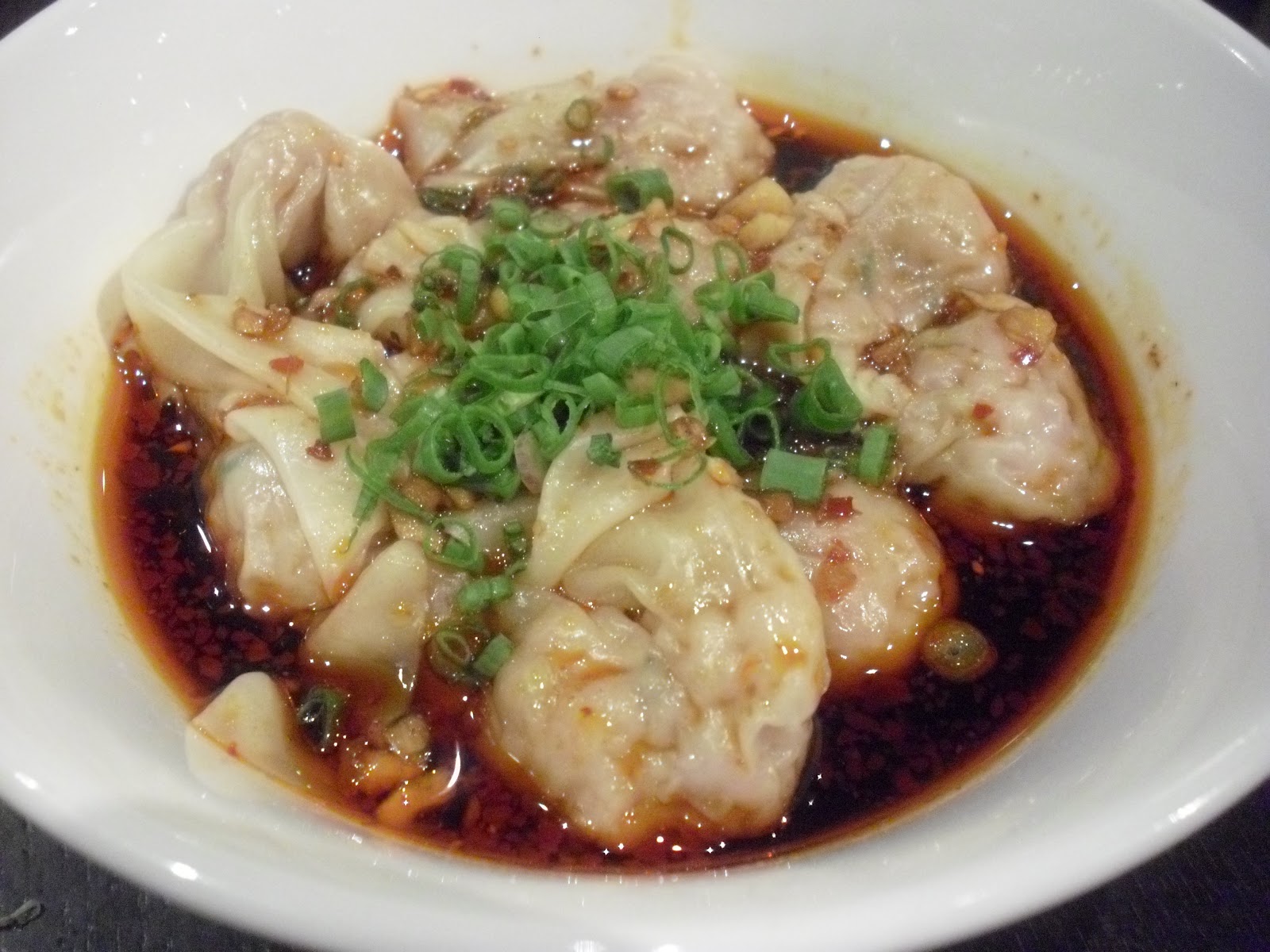
Stuff like the open-topped shrimp & pork shao mai (蝦仁燒賣) and the various wonton dishes are higher up in the pecking order in my opinion. Of the wonton dishes I preferred the spicy shrimp & pork (紅油抄手), which had a real kick, to the ones in special sauce (乾拌菜肉餛飩). Memo to Din Tai Fung management, I wouldn't use the term 'special sauce' should you decide to open in Britain.

There was other stuff, but I thought I'd go over to one of my dining companions to give his opinion. After all, he's not some dilettante blogger, but someone who's worked in kitchens most of his life and really knows his stuff. I am of course talking about Pa Noodles, and his comments over the course of the meal have been translated from Cantonese into italics:

How meticulous, there's a guy weighing out dumpling dough in the kitchen. The dumplings here really are quite exceptional; this is a PROPER restaurant, they don't take short cuts. Mind you, they could've been a bit more generous with the crab in the pork & crab XLB. My favourite? Probably the wontons in spicy sauce; the sauce has a proper kick. The pork chop with soup noodles (油炸排骨湯麵) is good, too – nice tender meat with good 5-spice flavour. But the rice, the fried rice, it wasn't fluffy enough, a bit too hard. But anyway, I like it here. Is there one of these in London? It'd make a fortune there.

A fair assessment by Pa Noodles, although I think he was a tad harsh about the rice! My mum liked Din Tai Fung too, although she didn't really rave about it. The thing is she's rarely effusive about food that isn't Cantonese. And my colleague liked it so much he's planning to visit the branch in his hometown of Sydney. Me? I've been to the Causeway Bay branch in Hong Kong four times now, and I love it. If only they could open one in London – I know it's a forlorn hope, but here's the link to my petition anyway.

Friday, 24 May 2013

Dim Sum, Noodles & Dinner @ A Wong

Quail egg croquette
Best new Chinese restaurant opening in recent memory or a case of the emperor's new clothes? While most reviews of A Wong have been praiseworthy, some have been a bit negative. I guess that's the risk one takes when diverging from more tried-and-trusted Chinese restaurant formulae. And it's the risk taking approach that appealed to me when I visited A Wong twice within the space of a few days. Twice? Give me a break, I had to check out both lunch AND dinner menus. For lunch I decided to go for a familiar combination of dim sum and noodles. As the dim sum is sold by piece (from £1.30 each) this enabled me, as a solo diner, to explore more of the menu than I might otherwise have done.

Xiao long bao
My favourite was a pair of soup-filled xiao long bao – one a Shanghai-style pork dumpling, the other a Yunnan mushroom, pork and truffle one. I liked both although I would've preferred the vinegar and ginger on the side rather than mixed in with the soup inside the former. It's not Din Tai Fung, but you're not going to find many better examples of XLB in London. Less enjoyable was the much written-about clear shrimp dumpling with citrus foam; it was a decent enough example of a har gau but the citrus foam didn't really do anything for me. And nor did the pork crackling atop a perfectly adequate open-topped pork and prawn dumpling aka siu mai.

Baked cha siu bao
The baked roasted pork bun with a sugared coating is a copy of Tim Ho Wan's famous baked cha siu bao. While it isn't as good as the original from Hong Kong, I enjoyed this crispy-topped bun although I would've favoured a sweeter filling. I also liked the quail egg croquette puff with its nicely runny yolk and crispy shell. However, I would've ditched one of the conflicting accompaniments of 'seaweed' and a ginger-dip. Sometimes less is more.

Crossing the bridge noodles
The only real disappointment of lunch was the Kunming 'crossing the bridge' noodles, a dish where ham, quail egg, preserved veg, fresh veg and rice noodles are served on a separate plate ready to be 'cooked' in the broth. Compared to traditional versions I've sampled in China, there were a few toppings missing, but I could forgive them that if the dish delivered. It didn't. The main problem was the temperature of the broth, which wasn't hot enough to cook the pak choi. And while I wasn't impressed by this dish, I was impressed by my server who listened to my comments and promised to pass on my feedback to the chef.

Dong Po pork
French beans with pork
Onto dinner, and I'm afraid to report that it was, on the whole, a tad disappointing, as most dishes were far too aggressively salty. So much so any citrus flavour in the beef with dried orange peel and chilli was drowned out. The Dong Po slow braised pork belly wasn't tender enough and it lacked the sweet and comforting aromatic notes that define this dish. It was just too salty. As were the twin offerings from Sichuan of dry fried French beans with pork and Sichuanese aubergine – the pork in the former was the saltiest thing we ate all night.

Steamed sea bass
The only respite from the salt assault was the two fish dishes: steamed wild sea bass with Jinhua ham and five-spice and chilli smoked cod cheeks. These were the undoubtedly highlights of dinner, in particular the perfectly steamed portion of sea bass, which was nicely complemented by the Jinhua ham. The cod cheeks were a joy, because it had been seasoned with a light hand.

The fact the mains were so disappointing was a shame, as before that, the pickles, peanuts in sweetened black vinegar and pickled cucumber kicked off the meal well. And the dim sum basket was none too shabby although a couple of our party (from Suzhou and Shanghai) who know a thing or two about xiao long bao were less than enamoured with these soup-filled dumplings. Yet again, the inclusion of the vinegar and ginger inside the dumpling proved controversial, as they felt that the sweetness of the meat was drowned out by the vinegar.

Tobacco smoked banana etc
Rather bizarrely it was the desserts that rescued the dinner from disappointment. We shared all four of the desserts on the menu: Beijing yoghurt with chilli barbecued pineapple; tobacco smoked banana, nut crumble, chocolate, soy caramel; snow ball merengue, lychee granite, mango puree and lime sorbet; and lastly, coconut ice cream with glutinous rice dumpling. The favourite was deemed to be the banana and chocolate dessert with its contrast in textures and flavour while I also found the refreshing lychee granita to be very good. If I could, I would just come here to eat dessert, which was amongst the best I've sampled in any restaurant, not just Chinese, in a long, long time.

When asked after dinner what we thought, we let our server know that we thought many of the dishes were just too salty. She said that she would let the chef know, and again it's good to see that this restaurant accepts feedback in a non-defensive manner. On the whole I thought A Wong was reasonable value with my solo lunch clocking in at £22 including tea and service whilst dinner cost £32/head including wine and service.

I'm not quite sure what to make of A Wong. Minor quibbles aside, I enjoyed the dim sum and would like to return to explore the rest of the relatively short selection over lunch. But then again, the noodles didn't quite cut it and dinner was somewhat spoiled, not by any degree of experimentation, but by over-aggressive saltiness. There was redemption in the desserts but that's not a good enough reason to return for dinner any time soon.

A. Wong on Urbanspoon

A Wong, 70 Wilton Road, London. SW1V 1DE (Tel: 020-7828-8931)
Nearest station: Victoria

Thursday, 18 October 2012

London Hall of Fame

The observant among you will have spotted that I've set up a new page called London Hall of Fame (this idea totally rip-offs was inspired by the B/A Pantheon) that features some of my favourite places to eat in the capital.

For those of you expecting Michelin stars and hot new openings, it isn't that kind of guide. It's not that I have anything against restaurants of that ilk; it's just that I'm not particularly well qualified to judge them.

What I am better qualified to judge, though, are restaurants where chopsticks are used, and I've put together a list of seven favourites that cater to different moods, palates and budgets. Delicate dim sum; spicy treats from Sichuan and Hunan; Vietnamese pho noodles and Cantonese BBQ all feature in my Hall of Fame.

Wednesday, 4 July 2012

Three Famous Beijing Restaurants

By chance, and by choice, I ended up at three Beijing restaurants regularly mentioned in guidebooks and the interweb: Xiao Wang's Home Restaurant (小王府), Shun Yi Fu (顺一府) and Noodle Bar (面吧).

Xiao Wang's Home Restaurant 小王府
I am someone whose foodie mindset has been conditioned by living in the UK, where mediocre restaurant chains, peddling all things to all people, blight the landscape. In particular, tourist areas are badly afflicted by chain-blight; London's South Bank is a prime example. So one might assume that I would have issues with Xiao Wang's. After all, it has a pan-Chinese 'Greatest Hits' menu, is a mini-chain, and the branch I visited is located in Ritan Park, a popular Beijing tourist spot.


I needn't have worried. Dishes like the fried hot spicy chicken wings in Xinjiang-style (孜然鸡翅), which were liberally laced with not only chilli but also cumin, and deep-fried pork ribs with pepper salt (飘香排骨) really hit the spot. And for those of you who like to match booze to food, I recommend ice-cold lager in the form of the local Yanjing Beer (燕京啤酒).


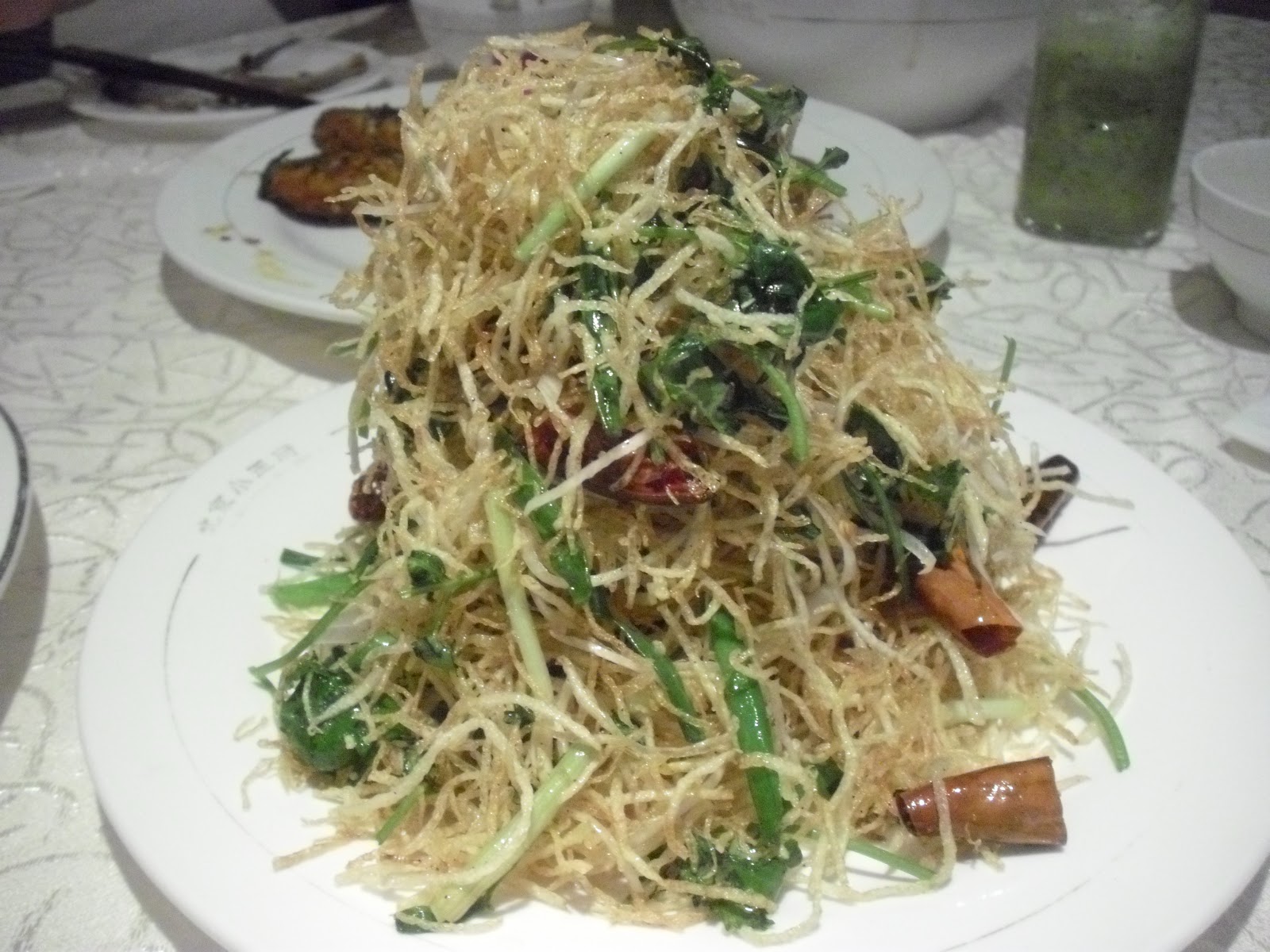
Another beer-friendly dish was an amazing giant mountain of fried potato slivers laced with spring onion, coriander & dried chillies. I know this dish is more than a bit trashy, but by god, these crispy spicy slivers of spud were SO addictive.


The squirrel-shaped Mandarin fish (松鼠桂鱼), so named because it's carved and cut up to look like a squirrel, was another winner. Don't be put off by the radioactive sweet & sour sauce; it went really well with the perfectly deep-fried Mandarin fish and pine nuts. Note to food geeks, although often thought of as a Shanghai speciality, it actually originates from Suzhou.


The classic hot & sour soup (酸辣汤) from Shandong province is found on Chinese menus worldwide, but like many famous dishes, it is often abused. Not at Xiao Wang's, where the use of top quality vinegar gave it a depth so often missing from versions that use the cheap stuff. And nor did they skimp on the other ingredients, especially the egg!

I know this meal appears to be a bit unbalanced with a, quite literally, unhealthy reliance on deep-fried treats. However, we did balance it out by ordering Cantonese-style pak choi with garlic, Sichuan cucumber salad and fresh wai-san in honey with cassia flower (the photo doesn't really do it any justice).


Wai-san (淮山) aka mountain yam is one of those Chinese ingredients that doesn't really taste of anything, but is highly valued due to its perceived health benefits. More commonly used in dried form in slow-cooked Cantonese soups; this was the first time I had tried it fresh. I really liked this dish with the slightly crunchy yam nicely complemented by the sweet honey. And as it's so healthy, it meant that I could bag that extra chicken wing without feeling guilty!

I like Xiao Wang's, and it shows that with enough expertise, a geographically diverse menu needn't mean compromises in the quality of the food. Combined with a comfortable European-style dining room and efficient service, this restaurant is an excellent option for those occasions when one is paralysed by the myriad choices found in Beijing.

Xiao Wang's Home Restaurant 北京小王府
Address 地址: 北京 日坛公园内北天门东侧
Tel 电话: +86-10-8561-7859 or +86-10-8561-5985

Shun Yi Fu 顺一府
Dinner at Xiao Wang's was my last meal with my Beijing colleagues, a fine bunch who looked after me really well. However, my food exploits were far from over, as I had a couple of days to myself armed with a shortlist of Beijing eateries. First on my list was Shun Yi Fu; I was really looking forward to eating at this dumpling joint after a previous visit three years ago. So you can't even begin to imagine how pissed off I was when I saw that the restaurant had been bricked up.

Mercifully, there was another branch about five minutes walk away, and once I found it, I ordered a steamer of pork & fennel dumplings (猪肉茴香蒸饺). There wasn't anything wrong with these but they could have done with having a more intense fennel flavour.


While I'm sure some of the other varieties of dumplings would have been more to my taste, there was something else that was wrong. The location. This newer branch is located in a shopping mall, and is totally devoid of the charm and character that made the original Shun Yi Fu so great. And while I wouldn't discount visiting this restaurant again, I won't go out of my way to do so.

Shun Yi Fu 顺一府饺子馆
Address 地址: 北京 王府井138号 APM Shopping Mall 5/F 新东安广场5层
Tel 电话: +86-10-6513-9558

Noodle Bar (面吧)
The simply named Noodle Bar is located in an upscale development called 1949 - The Hidden City that is also home to an art gallery, a wine bar, a cocktail bar, a private club, and two other restaurants including the highly rated Duck de Chine.


Noodle Bar is a tiny joint with just a dozen or so seats at a counter surrounding an open kitchen. Given the small scale of operations, the menu is brief with a few small plates supplementing the soup noodle selection. For the latter, the choice is beef brisket, tendon, tripe, a combination of all three, or wild mushroom (for the veggies) with a further choice of thin or thick noodles. I chose the beef brisket with thin noodles and from the selection of small plates I dodged the salads and went with spicy chicken wings.


Whilst the al dente hand-pulled noodles that I saw made before my very eyes were excellent, the rest of the combo was a big letdown. In particular, the broth lacked depth with little evidence of star anise, cinnamon or any of the other spices usually found in beef noodle soup. I had to give it a big kick-start from the pots of chilli oil and roasted garlic on the side along with the crispy bits from the spicy chicken wings. I also got the hump at how little beef there was, especially as there was a massive chunk of (unadvertised) mooli. I may have caught it on a bad day, but I find little to recommend Noodle Bar.

Noodle Bar 面吧 @ 1949 - The Hidden City
Address 地址: 北京 工体北路 太平洋百货南门对面
Tel 电话: +86-10-6501-1949

Sunday, 10 June 2012

Peking Duck (& Six Other Duck Dishes) @ Duwang 都王


It wasn't until my fourth night in Beijing that I ate what could be considered local food. In other cities (like Hong Kong or Singapore) I would have stomped my foot like a spoilt six-year-old if I had to wait that long. But I don't mind waiting in Beijing because it's, with the possible exception of Shanghai, the only city in the world where one can sample food from every corner of China. For instance I ate Cantonese, Shanxi, Buddhist vegetarian, Xinjiang, Taiwanese, Sichuan, Shanghai and (more) Shanxi food before pitching up at Duwang 都王 for some local fare.


Duwang specialises in the Chinese capital's most famous dish: Peking duck (Beijing kaoya 北京烤鸭). While the crispy skinned duck is the restaurant's headline act, the support acts are pretty damn good, too. Opening up this veritable festival of all things duck was a cold starter of mustard duck webs. These had been deboned leaving just the skin, web and cartilage. I really enjoyed the crunchy cartilage, with the mustard giving it a nasal passage-clearing quality.


Next up was a rather theatrical dish of duck hearts served with a flaming teacup of baijiu 白酒. Here the hearts were skewered then placed in booze-fuelled flames. This may seem gimmicky, but the effect of crisping up the duck hearts enhances both the taste and texture. At around the same time out came a dish of duck liver, which was a bit like a pâté. This was OK, but to be honest, I can barely remember anything about it – never a good sign.


Over the years I've pretty much eaten most parts of a duck, but the meat from the jaws was a new experience for me. Served in a vat of red oil infused by chillies and Sichuan peppercorns, these Sichuan-style duck jaws were revelatory. The meat on the jawbone was remarkably tender and had soaked up the numbing heat of the Sichuan peppercorns. What's more, the tongues were still intact – a bonus! Also bobbling alongside the jaws were lotus root, potato slices and mooli. These had also absorbed lots of flavour from the red oil. I was so engrossed in this dish that I missed out on taking photos of the chef carving up the Peking duck.


By the time I'd finished my assault on the duck jaws, the Peking duck had already been carved up into slices of crispy skin and tender meat. As is the modern way, the crispiest bits of skin are set aside and dipped into sugar. The rest of the skin and meat are then used to fill pancakes or even better, sesame buns (zhima shaobing 芝麻烧饼), with the usual spring onion, cucumber and sweet bean sauce. The duck was very good at Duwang, and the meat was kept moist and tender by being served on plates over a tealight.


You can opt to reserve some of the duck meat for a stir-fry, but we eschewed that option, as the restaurant usually diddles you by not using all of the meat. Instead the carcass is usually bagged up and taken home to make stock. However, in this instance it was used to make an extra course of deep-fried duck bones tossed in garlic chilli salt. This was a fine accompaniment to my beer and I enjoyed hoovering up the last remnants of meat off the bone! There was also one last course of duck soup, but this was a bit bland.

There were also some non-duck dishes such as cucumber salad, stir-fried greens and other bits and bobs, but I can't remember much about them. Besides, who cares? Restaurants like Duwang stand or fall by the quality of their duck dishes.

There's a lot to like about Duwang: the good service, the traditional 'red and gold' décor, but above all, the pride in the food it knocks out. The thing is, though, Beijing (being a city of 20 million inhabitants) isn't easy to get around, and a restaurant has to be really exceptional to schlep across town for. Duwang just falls short of falling into that category, and I consider it to be an excellent neighbourhood joint rather than a must-visit. Mind you, it is close to the Olympic complex, which remains a popular tourist attraction.

The easiest way to get to Duwang is to hail a taxi, and show the address to the driver. As the restaurant doesn't have English signage, look out for the characters 都王 on the shopfront.

Duwang Roast Duck Restaurant 都王烤鸭店
Address 地址: 北京 朝阳亚运村慧忠北里201号
Tel 电话: +86-10-6491-9665 or +86-10-6491-9667

Other Peking Duck Joints in Beijing
For a similar old school duck-focussed feast to Duwang, I recommend Ya Wang (鸭王), which has branches dotted across the capital. I've probably been to this restaurant more than any other in Beijing, although my last visit was way back in 2009. More recently, fellow blogger Hungry Female enjoyed Liqun, a charming, if slightly run-down, joint in a Beijing hutong.

For an upmarket Peking duck experience, the consensus choice seems to be Da Dong (大董). Here the focus is as much on modern Chinese cuisine as the duck. I was blown away when I ate there in 2010. Other posh places that people rate include Duck de Chine and Made in China.

One last word of advice, lots of guidebooks and websites still mention Quanjude 全聚德 as a place to try Peking duck. However, many are of the opinion that this famous restaurant group is trading on past glories, and my colleagues in Beijing consider it to be a tourist trap.

Tuesday, 5 June 2012

Courtesan Dim Sum Bar

Dim sum has been around in the UK for many years, but it was largely the preserve of the Chinese community for a long time. However, in the last decade or so, it has crashed into the mainstream. One of the side effects of its popularisation has seen this hitherto daytime treat served in the evenings with cocktails. Unsurprisingly, this jars with traditionalists such as myself, but I've just about got over this shocking breach of etiquette!


While there is no reason why an all-day dim sum cocktail bar shouldn't work, it doesn't help that the food served by this concept's chief exponent, Ping Pong, is so poor. With that in mind, one might suspect that I wouldn't be tempted by Courtesan Dim Sum Bar, but this Brixton newcomer has enough old school touches (namely a bilingual Chinese-English menu including cheung fun) for me to give it a try.


Kicking off with the steamed selection, the king prawn dumplings (har gau 虾饺) were above par with well-seasoned prawns and a delicate wrapper. Less successful were the chicken & coriander dumplings (香菜鸡饺), as I'm not a big fan of minced chicken - it just isn't fatty or juicy enough. The steamed roast pork buns (cha siu bao 叉烧包) and chicken buns (gai bao 鸡包 ) were nice and fluffy although stingily filled.


Onto the non-steamed offerings, and I was really impressed by the taro croquette (wu gok 芋角) as it was crispy, not oily with a tasty filling. I also liked the roast pork puff (cha siu sou 叉烧酥), but was less enamoured by the roast duck puff (siu aap sou 烧鸭酥). The latter was just too aggressively peppery for my liking, and I could barely discern that the meat was indeed duck.


So far, so good, but where Courtesan really shines is with its cheung fun. In particular, the
prawn with beancurd cheung fun (鲜腐皮肠粉) where mashed prawn is wrapped in tofu skin, deep fried then carefully wrapped with rice noodle sheet. This triple-textural delight of springy mashed prawn, crispy tofu skin and slippery smooth cheung fun was a revelation. The roast pork cheung fun (叉烧肠粉) was also very good, too. I'd even go so far to say that Courtesan's cheung fun is right up there with London's finest.


Whilst the cheung fun was exemplary, there were some duff dishes, which regrettably included some of the house specials. I just didn't get the idea behind the jerk chicken parcel in rice. The rice wasn't moist enough, and surely jerk chicken isn't at its best when steamed in a lotus leaf. And the seasoning didn't help either, as it was very one-dimensional in its spiciness.

In common with the steamed buns, the sesame grilled vegetable & meat buns (煎菜肉包), while technically spot-on, were inadequately filled. Rightly or wrongly, when the label Sichuan/Szechuan is attached to a dish, one expects fireworks. So it was a bit sad that the Szechuan-style ribs (川式排骨) were so insipid. To me, they were bog-standard fried spare ribs, but without the familiar Cantonese chilli-salt (chiu yim 椒盐) seasoning.


There wasn't much room for dessert, but we managed to squeeze in some black sesame balls (雷沙汤丸), which were of a decent standard. As well as cocktails, Courtesan has a very good tea selection, and a dim sum meal with tea would set you back around £20/head.

On balance, I like Courtesan. The classics such as har gau, wu gok and cheung fun (especially the latter) were of a high quality. There were some misfires, but there is undoubted skill in the kitchen. Service was good, but then again we were only the diners the other Saturday (I can only put this down to the fact that the restaurant was newly opened in late-April, and had only been in business for three weeks when we visited). And given the largely empty dining room, I couldn't really judge the ambience. For that I guess you need to visit on a busy night.

So where does Courtesan sit in the London dim sum scene? For me, it's a good local rather than a destination for dim sum. In my opinion, there a couple of factors holding this restaurant back from greatness.

Firstly, the menu is too brief, and while this isn't necessarily a bad thing; there are some notable dim sum absentees such as fried cuttlefish cakes (mak yu beng 墨魚餅). And the total lack of non-dim sum dishes such as Cantonese BBQ and noodles restrict opportunities to bulk out the meal.

Secondly, it isn't particularly cheap with prices from £3.20 upwards, which is on a par with swankier restaurants such as Princess Garden and Phoenix Palace, both highly regarded dim sum destinations. Then there's the wider competition within Brixton itself, where there are loads of affordable, decent quality dining options.

I fear I may be being too hard on Courtesan; I don't mean to, it's just that I'm very particular when it comes to dim sum. And for all my (minor) gripes, I'm glad that this restaurant is spreading the gospel of dim sum to Brixton. So if you do find yourself in the neighbourhood, do check this place out.

Courtesan Dim Sum Bar on Urbanspoon

Courtesan Dim Sum Bar, 69-73 Atlantic Road, London, SW9 8PU
(Tel: 0208-127-8677) Nearest station: Brixton

Sunday, 13 May 2012

The Republic of Din Tai Fung

I still can't get my head around the fact that there are 12 branches of Din Tai Fung (鼎泰豐) in Singapore (more than any other city in the world). It's as if the city-state should be renamed the 'Republic of Din Tai Fung' in honour of the legendary dumpling restaurant. I visited the branch at the Wisma Atria shopping mall (one of three branches on Orchard Road alone). Joining me was an old friend, Mr Pak Choi, who also happened to be passing through Singapore.


Naturally, we ordered some xiao long bao 小籠包 (which come in portions of 6's or 10's). These soup-filled dumplings were as good as ever. Of the two versions we tried, we preferred the pork & crab over the standard pork, as the crab lent some sweetness to the dumplings. Moreover, the pork dumplings were (by Din Tai Fung's standards) untidy in their construction.


Mr Pak Choi's favourite was the pork chop w/egg fried rice 排骨蛋炒飯. I maintain that Din Tai Fung's fried rice is the best in the world, and the pork chop was also better than I remember it being in Hong Kong. That's due in part to the five-spice powder not being as overpowering and the pork chop being on the bone.


The wontons in black vinegar & chilli oil 紅油抄手 were good although I thought the vinegar/chilli oil ratio was skewed too much in favour of the former. Being a Sichuan dish, this dish should have been spicier than it was.


To complete our order, we went for some stir-fried spinach w/garlic and a portion of noodles in special sauce. Both were cooked to perfection, and I particularly liked the sweet soy dressing that came with the noodles. Having said that, I'm not sure Din Tai Fung should use the term 'special sauce' if they ever open up in the UK.


Six dishes between two was, probably, just about enough, but we couldn't resist something sweet in the form of peanut dumplings. This was, unbelievably, my first foray into Din Tai Fung's dessert selection, and the dumplings did not disappoint. These steamed mochi balls were filled with what tasted like molten peanut brittle laced with sesame – truly amazing!

What Mr Pak Choi didn't realise when he joined me for dinner was that he was being coerced into joining the campaign to bring Din Tai Fung to London. The thing is, and I don't mean this in a patronising way, he's more of a regular guy than me. He's neither a food blogger and nor is he obsessed with Chinese/East Asian cuisine. He's just someone who enjoys eating out while being receptive to different styles of food. In other words, exactly the kind of demographic that Din Tai Fung needs to attract if it is to be successful in London.

On the food front, Mr Pak Choi had no complaints, but he thought the ambience was lacking. I'm inclined to agree, as neither of us enjoyed dining in a space reminiscent of where a branch of Costa Coffee might be found in a British shopping centre. Apart from that, he could see no reason why Din Tai Fung wouldn't be a roaring success in London.

Long time readers of my blog will know what's coming next! This is where I beg you to add your name to the petition to bring Din Tai Fung to London by leaving a short comment on my other blog: Din Tai Fung London Fan Club.

Now I know some of you are thinking why you should bother supporting a campaign to bring a restaurant chain to London that you have never visited, and in all likelihood never even bloody heard of. Well the thing is you might not realise that Din Tai Fung is missing from your life, but until a few weeks ago nor did Mr Pak Choi. And you might NEVER know if Din Tai Fung doesn't open in London – so please sign the petition NOW!

Din Tai Fung, #02-48/53 Wisma Atria Shopping Mall, 435 Orchard Road, Singapore
(Tel: +65-6732-1383) Nearest MRT Station: Orchard